Bozeman to Yellowstone: A Weekend Guide
Most Yellowstone trips start with one question: where should you stay? A lot of travelers look for lodging inside the park. More and more are choosing Bozeman instead. You get easier airport access, better dining options, and flexibility once the day ends. After a full day in Yellowstone—driving, walking, navigating crowds—coming back to a comfortable base changes the whole experience.
Distance and Access from Bozeman
Bozeman’s location is the advantage. You are positioned between Yellowstone’s two most-used entrances: the North Entrance near Gardiner (Montana) and the West Entrance near West Yellowstone. This gives you flexibility to choose your route based on what you want to experience, and the drive itself is part of the trip.
North Entrance (Gardiner)
Bozeman to Gardiner: 1 hour, 30 minutes
The route to the North Entrance takes you south through the Gallatin Valley and Paradise Valley, following the Yellowstone River for much of the drive. The scenery builds gradually—river canyons, mountain ridges, then open valleys. By the time you reach Gardiner, you are already in landscape that feels remote and wild.
Highlights: Access to Mammoth Hot Springs, Lamar Valley, and Yellowstone’s wildlife-rich northern range. Lamar Valley is often called the “Serengeti of North America” thanks to its large populations of bison, elk, pronghorn, coyotes, bears, and wolves. Wildlife viewing opportunities are especially strong in the early morning and evening hours.
Best For: Wildlife viewing, fewer crowds, and scenic drives through Paradise Valley. The drive alone is worth the trip.
West Entrance (West Yellowstone)
Bozeman to West Yellowstone: 1 hour, 45 minutes
The route to the West Entrance takes you south and then west, crossing the Madison Range and dropping into the geyser basins. The drive is longer but takes you through Gallatin Canyon alongside the river, with fishing access and pull-offs the entire way.
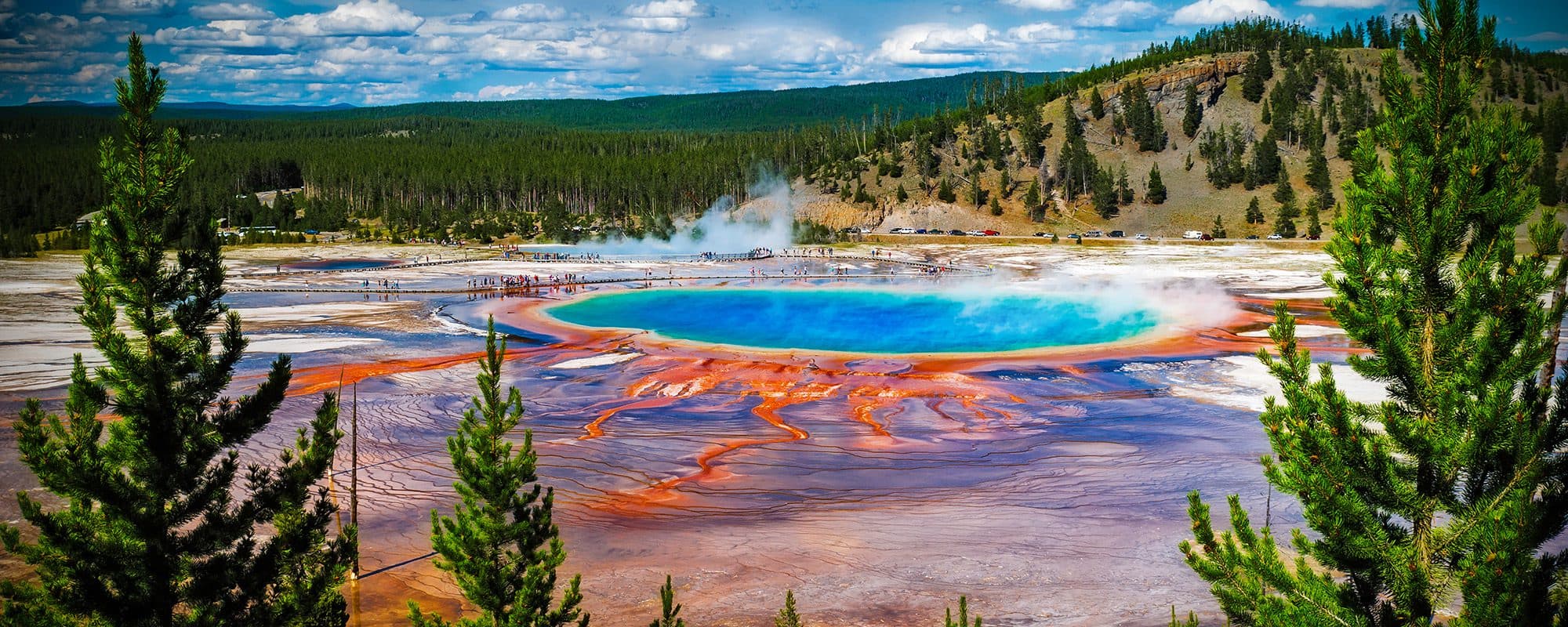
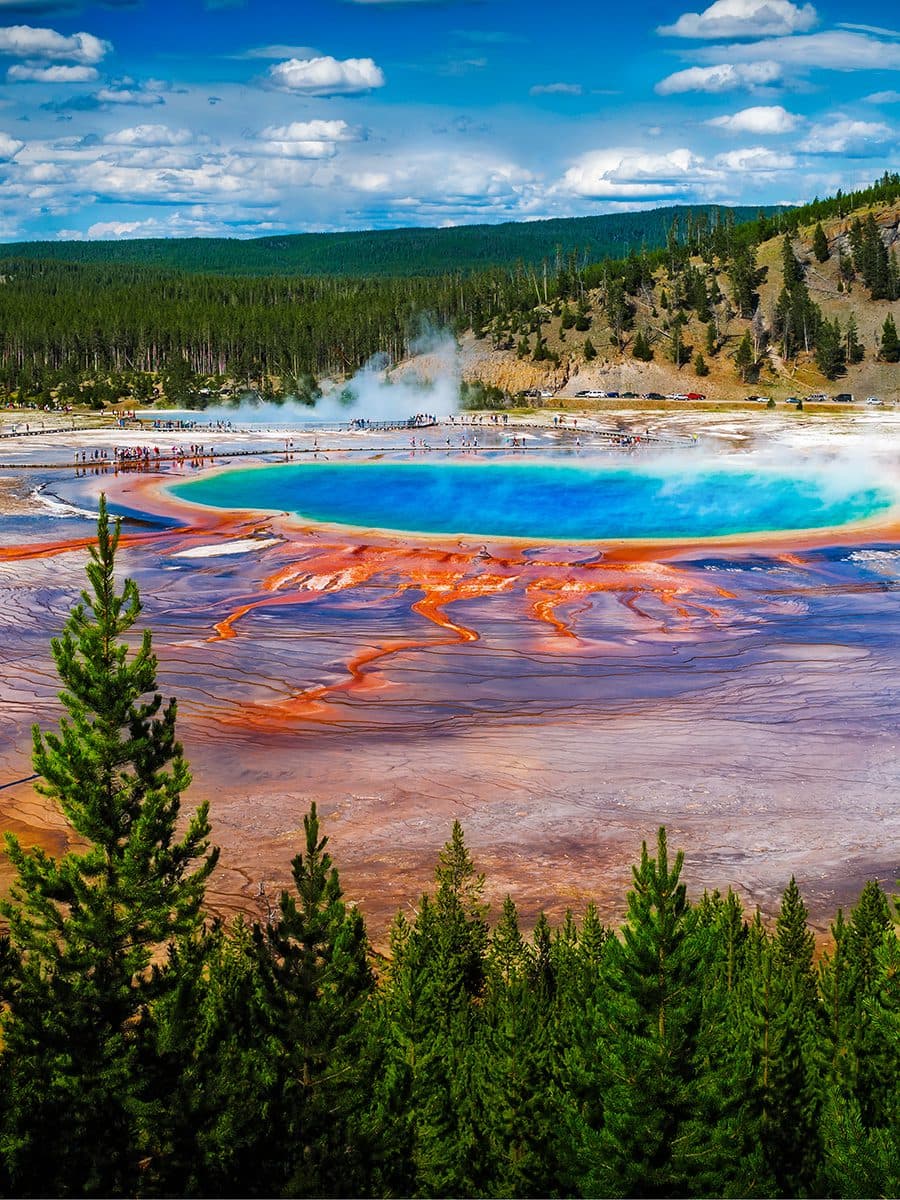
Highlights: Access to Old Faithful, Grand Prismatic Spring, and the geothermal features most people associate with Yellowstone. This side of the park offers boardwalks, geyser basins, and many of Yellowstone’s most iconic attractions.
Best For: First-time visitors and travelers who want to experience Yellowstone’s famous geothermal features and classic postcard scenery.
Choose Based on What You Want
Your choice between north and west determines what kind of day you have. North means wildlife, open valleys, and quieter crowds. West means geysers, hot springs, and more people. Both are worth experiencing, and your drive time from Bozeman means you can mix and match across multiple days without changing hotels.
For first-time visitors, west usually makes more sense. For return trips or if you prefer wildlife and solitude, north is worth the choice.
Sample Yellowstone Day Trips from Bozeman
Yellowstone Wildlife Day
Best For: Wildlife enthusiasts, photographers, and those looking to spend a full day in Yellowstone.
Driving Time: Approximately 5 hours roundtrip (excluding stops)
Route: Download Map
Field & Stream Lodge / Paradise Valley / Roosevelt Arch / Mammoth Hot Springs / Lamar Valley / Bozeman
Experience Yellowstone’s wildlife-rich northern range, beginning with one of Montana’s most scenic drives through Paradise Valley. Enter the park through Gardiner’s historic Roosevelt Arch before exploring Mammoth Hot Springs. Continue east to Lamar Valley, one of the best wildlife viewing destinations in North America, where bison, elk, pronghorn, coyotes, and occasionally wolves can be spotted throughout the day.
Local Tip: Wildlife activity is typically highest in the early morning and evening hours. Bring binoculars and allow extra time for bison traffic.
Paradise Valley & Yellowstone Sampler
Best For: First-time visitors, couples, and guests looking for a relaxed day of sightseeing.
Driving Time: Approximately 3.5 hours roundtrip (excluding stops)
Route: Download Map
Field & Stream Lodge / Livingston / Chico Hot Springs / Paradise Valley / Roosevelt Arch / Mammoth Hot Springs / Bozeman
This relaxed itinerary combines some of southwest Montana’s most scenic destinations with a taste of Yellowstone National Park. Start with coffee and a stroll through historic downtown Livingston before heading south through Paradise Valley. Stop at Chico Hot Springs, take in views of the Absaroka Mountains, and enter Yellowstone through Gardiner’s Roosevelt Arch. Explore the terraces and boardwalks of Mammoth Hot Springs before returning to Bozeman.
Local Tip: This route works especially well for those who want to experience Yellowstone without committing to a full day inside the park.
The Drive Is Part of the Experience
Whether you go north or west, the drive from Bozeman is not something to rush through. Both routes follow rivers and mountain valleys, with pull-offs, fishing access, and trailheads along the way. In summer, stopping for coffee, photos, a quick hike, or simply to sit by the water is part of the experience. The drive gives you time to settle into the trip instead of feeling like you are simply moving between destinations.
What to Prioritize in the Park
One common mistake: trying to see everything in one day. Yellowstone is enormous. If you spend the day driving between major attractions, you end up exhausted instead of satisfied. A better approach is to pick one side of the park and slow down once you arrive.
North Entrance Priorities
If you enter through Gardiner, prioritize Mammoth Hot Springs, Lamar Valley, and the scenic drive between them. This side is known for wildlife. Plan for bison, elk, pronghorn, and bald eagles. Occasionally, you may spot bears or wolves in the distance. The crowds here are lighter, allowing you to move at your own pace.
West Entrance Priorities
If you enter through West Yellowstone, Old Faithful, Grand Prismatic Spring, and Fountain Paint Pots are the main stops. These areas involve more walking and longer boardwalks. Parking lots fill by mid-morning in peak season. It is busier, but for a first visit, this side showcases Yellowstone’s most iconic geothermal attractions.
Consider a Guided Tour
If you prefer having an expert guide who knows the park’s rhythms, wildlife patterns, and access points, booking a guided tour can be a great option. You skip the navigation and gain insight you would not find on your own.
Available options include Yellowstone Safari Company, Yellowstone Adventure Tours, and Yellowstone Excursions. Many offer private experiences, wildlife-focused tours, photography tours, and family-friendly excursions. You can book directly through these services or ask the Lodge staff for recommendations based on your interests and schedule.
Yellowstone Through the Seasons
Yellowstone changes dramatically throughout the year, and your experience will depend on when you visit.
Summer (June-August) brings long days, open roads, and access to the park’s most popular attractions. Expect larger crowds, especially around Old Faithful and Grand Prismatic Spring.
Fall (September-October) is a favorite among many visitors. Cooler temperatures, changing colors, and active wildlife make it one of the best times to explore the park.
Spring (April-May) offers rushing rivers, emerging wildlife, and fewer visitors, though weather and road conditions can be unpredictable.
Winter (November-March) is a completely different experience. Many roads close to vehicle traffic, and access becomes limited to guided snowcoach tours, snowmobiles, and designated winter routes.
What to Pack for a Yellowstone Day
Even in summer, Yellowstone weather shifts quickly. Mornings are cold, afternoons warm, and storms move through fast at elevation. Bring layers, water, snacks, comfortable walking shoes, and binoculars for wildlife. If hiking, bring bear spray. Starting early from Bozeman gives you more daylight once you are in the park.
Why Bozeman Beats Staying Inside the Park
Staying inside Yellowstone offers limited lodging, dining, and flexibility once the day ends. You are locked into the park experience. Bozeman gives you a base with restaurants, breweries, shops, and a community atmosphere. You can spend the day inside the park and return somewhere comfortable.
One of the biggest advantages of staying in Bozeman is that Yellowstone becomes part of a larger Montana adventure. Spend one day exploring geysers and wildlife, another fly fishing on the Gallatin River, hiking nearby trails, attending a local rodeo, or enjoying downtown Bozeman’s restaurants and breweries. Instead of committing your entire trip to the park, you have the flexibility to experience the region more fully.
That flexibility is why many travelers choose Bozeman. It’s a smart basecamp for a well-rounded Montana experience.
Staying at Field & Stream Lodge
Field & Stream Lodge works well as a Yellowstone basecamp because the logistics are simple. You can leave early, spend the day in the park, and return to a comfortable space without overplanning the evening. The lodge sits on the direct route south to both entrances. You get easy highway access, on-site dining at Dry Fly Saloon and The Honey Hole, and flexible family-friendly room configurations.
The best Yellowstone trips leave room for discovery. Spend the day watching wildlife in Lamar Valley or exploring Mammoth Hot Springs before returning to Bozeman for dinner, a local beer, and a comfortable place to recharge. Yellowstone may be the destination, but Bozeman gives you the flexibility to experience the best of Montana along the way.
Hooked?
We'll drop you a line. Sign up to receive Lodge Co. news including openings, events, and special offers.